
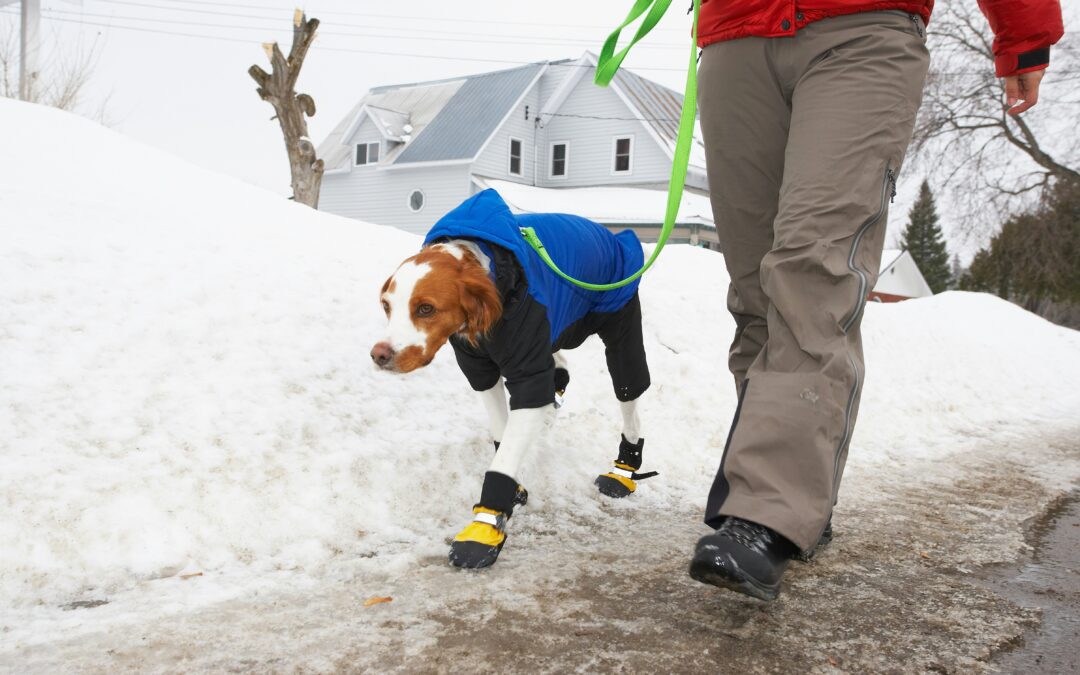
Winter can be a magical season, filled with snow-covered walks and cozy evenings indoors. While many pets enjoy playing in the snow, cold weather also introduces real risks that pet owners should not overlook. Just like people, pets can suffer from cold exposure, chemical irritation and hidden winter hazards. By understanding how long your pet should be outside, when protective clothing is needed and how de-icing products can affect their health, you can help keep your furry family members safe all winter long.
1. Monitor Time Spent Outdoors
One of the most important winter safety considerations for pets is limiting how long they remain outside. Even pets with thick fur can be vulnerable to cold temperatures, wind chill and moisture. Prolonged exposure increases the risk of hypothermia and frostbite, particularly on sensitive areas like ears, paws, tails and noses.
Small dogs, short-haired breeds, puppies, senior pets and those with chronic health conditions are especially susceptible to the cold. These pets may need significantly shorter outdoor breaks than larger or double-coated breeds. While some dogs may appear eager to stay outside, they may not recognize when their body temperature is dropping to dangerous levels.
As a general rule, outdoor time during cold weather should be limited to short, purposeful outings for bathroom breaks or brief exercise. Watch for warning signs such as shivering, lifting paws off the ground, whining, slowing down or attempting to turn back home. If you notice these behaviors, it’s time to head indoors immediately. Cats should be kept indoors during freezing temperatures, as they are at high risk of cold exposure and may seek warmth under car hoods or in unsafe areas.
2. Use Proper Clothing and Paw Protection
Winter clothing isn’t just a fashion statement for pets—it can be a critical layer of protection. Coats or sweaters help retain body heat, particularly for dogs with thin fur or low body fat. A properly fitted coat should cover the chest and torso without restricting movement. Waterproof or water-resistant materials are especially helpful during snowy or wet conditions.
Booties are another important winter accessory, as paws are highly vulnerable to cold, ice and chemical exposure. Snow and ice can accumulate between paw pads, leading to discomfort, cracking or cuts. Cold surfaces can also cause frostbite on paw tissue, especially during extended walks.
While some pets may take time to adjust to wearing booties, gradual introduction at home can help. If booties aren’t an option, wiping your pet’s paws with a warm, damp cloth after outdoor walks is essential. Applying a pet-safe paw balm before heading outside can also help protect paw pads from drying and cracking.
3. Be Aware of De-Icing Product Dangers
De-icing products are one of the most overlooked winter hazards for pets. Many sidewalks, driveways, and roads are treated with salt or chemical ice melts that can be harmful when they come into contact with your pet’s skin or are ingested.
These products can cause irritation, chemical burns or cracking on paw pads.
When pets lick their paws after walking, they may ingest toxic substances, leading to gastrointestinal upset or more serious health concerns. Some de-icers also contain ingredients that are toxic if consumed in larger amounts.
To reduce risk, choose pet-safe de-icing products for your own property and avoid heavily treated areas when walking your dog. Booties offer the best protection, but thorough paw cleaning after walks is still essential. Pay attention to signs of irritation such as excessive licking, redness, limping, or swelling and contact your veterinarian if symptoms persist.
Additionally, antifreeze poses a serious winter threat. Its sweet taste can attract pets, but even small amounts can be highly toxic. Always clean up spills immediately and store automotive products securely out of reach.
A Safe and Comfortable Winter for Your Pet
Winter doesn’t have to limit your pet’s enjoyment or activity—it simply requires a bit of extra planning and awareness. By keeping outdoor time short, using appropriate clothing and paw protection and minimizing exposure to harmful de-icing products, you can significantly reduce winter-related risks.
When in doubt, remember this simple rule: if it feels too cold for you, it may be too cold for your pet as well. A warm, safe winter allows your pet to stay healthy, happy and ready to enjoy the season by your side.